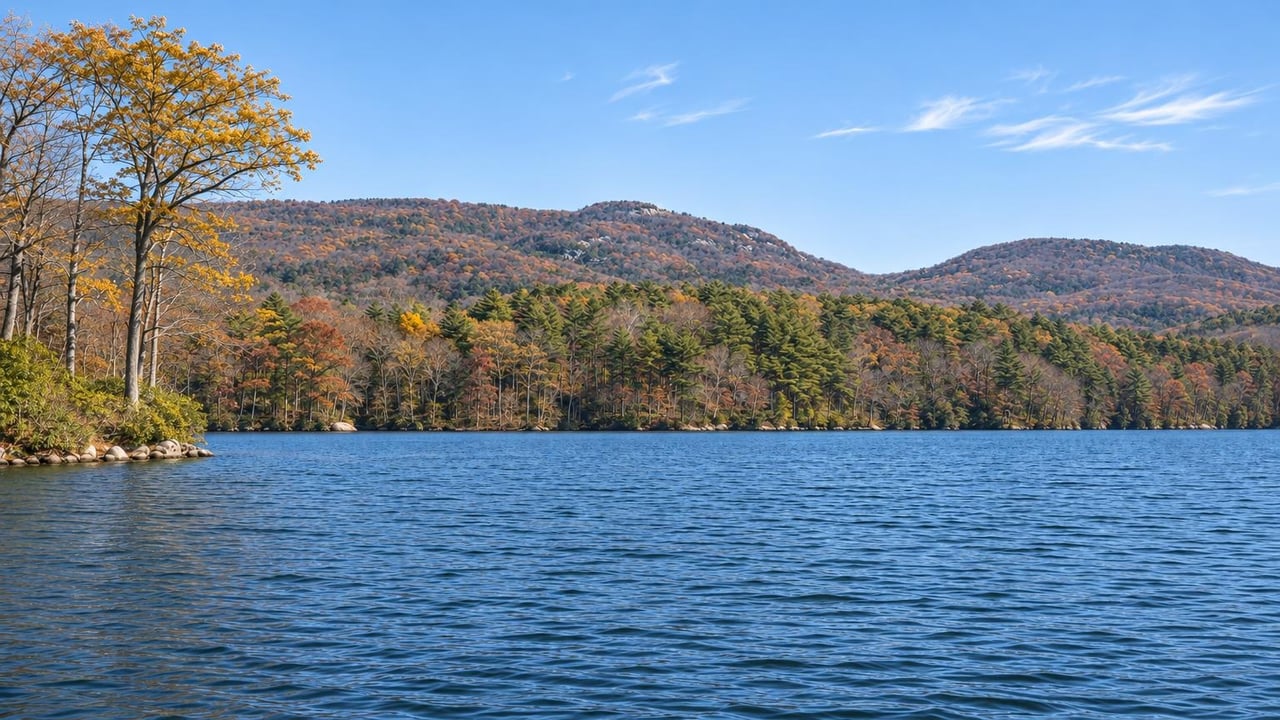
Where to Find the First Lake Toxaway Around Today's Shoreline
November 26, 2026
In 1961, newspapers had some fun with a waterfall that seemed to have disappeared. Crews refilling the basin above US 64 had to block Toxaway Falls for a while, and the papers wrote it up as a "missing" waterfall, according to the Historic Toxaway Foundation. The joke worked because the falls had kept running for the 45 years the lake was gone. Streams wound across the empty valley through a forest that had grown back and came together to drop over the same ledge.
That's a useful way to think about the place you live. The water under your dock fills a second Lake Toxaway, finished in September 1961. Most of what the first lake was built for is gone. The time between the two lakes decided what came back, and a few buildings from the first era are still standing within a short drive of the shoreline.
The original Lake Toxaway was one piece of a resort chain. J. Francis Hayes, a Pennsylvanian who moved to western North Carolina in 1890 for his health, formed the Toxaway Company in 1895. The company built the Fairfield Inn and Fairfield Lake first, then Lake Sapphire and the Sapphire Inn the next year. Hayes knew the hotels depended on rail service, so he bought the failing Brevard-Hendersonville Railroad and pushed to extend it to Old Toxaway, the town now called Rosman. To get the county to back the bond, he promised a hotel in Brevard, and the Franklin Hotel opened there in July 1900 at $12.50 a week.
Then came the big one. On roughly twenty thousand acres around Hogback Mountain, the company built what the Historic Toxaway Foundation calls the largest lake ever built in the Appalachians. It was a mile wide and three miles long, with more than fifteen miles of shoreline, held back by a 500-foot earthen dam at the south end.
Edward H. Jennings, a Pittsburgh banker and the company's largest shareholder, oversaw the Toxaway Inn, completed in 1903. Wood from 40 species of trees went into the building, and a 1912 Southern Railroad brochure said it could host 500 guests. A spur line from Old Toxaway was finished in 1904, and the Lake Toxaway depot got a special lot to park the private Pullman cars of families like the Carnegies, the Rockefellers and the Vanderbilts. The inn had fishing, tennis, horseback riding, bowling, and a nine-hole golf course completed in 1912. Orchestras played on a lake island reached by a rustic wooden bridge.
The resort had money trouble the whole time it was popular. The Toxaway Company declared bankruptcy in 1911, and Jennings bought the inn along with 27,910 acres. The company was dissolved in 1913, and Jennings kept the inn running.
In July 1916 a series of storms crossed western North Carolina. Asheville had the worst flood in its history, and the rain filled Lake Toxaway to its limit. Some weeks later a hurricane came inland from the Gulf of Mexico. On August 13, 1916, at 7:10 p.m., the earthen dam gave way.
The Historic Toxaway Foundation reports that a geologist from Georgia later worked out that "5,376,548,571 gallons changed hands." The story passed down is that the only casualty was a blind mule. The economic damage was another matter. Blue Ridge Country reported that houses were destroyed, crops washed away and community mills ruined.
The water poured down the Toxaway River gorge. Geological survey material published by the Transylvania County NCGenWeb project says the debris flow went more than seven miles into South Carolina and left cobble, gravel and sand under what is now Lake Jocassee. About half a mile below Toxaway Falls, the flood left a boulder nearly 60 feet long.
Exie Wilde Hensen calls the years from 1916 to 1961 "the time between the lakes." She is the daughter of Joe Wilde, a lumberman and photographer, and she used the phrase in a video interview the Historic Toxaway Foundation quotes. The foundation says it was as if the place had been "preserved in amber." A group of Asheville businessmen tried to reopen the inn, and the Great Depression stopped them. Local families went back to the work that had supported them before the resort, which the foundation lists as farming, timber "and perhaps some 'private distilling.'"
The Toxaway Inn stood for three decades after its lake drained away. A caretaker, Tolvin T. Miller, looked after the empty building. In late 1946 a Tennessee businessman bought it for $20,000. The next year it was torn down, and its fixtures and salvageable materials were sold off.
On the valley floor, a forest grew back where the water had been. When work on a new lake started, crews found the rotting hull of a steamboat in the lakebed and had to clear brush and timber that had grown up over four decades. The Transylvania County Library adds another relic from the old resort: a 60-foot-deep hole holding scrap iron and a pipe, linked to the mineral waters the Toxaway Inn once advertised.
R.D. Heinitsh and D.W. Boyd formed Lake Toxaway Estates, Inc. in 1960 to bring the lake back. In 1961 the company became the Lake Toxaway Company, reviving the old name from the resort era. The new dam had a solid granite spillway and was finished by early April 1961. Filling started that spring and was complete in September.
The new owners did not rebuild the grand hotel. They built forty miles of roads around the lake and started selling lots. A nine-hole golf course came next and later grew to eighteen holes. Because of that choice, today's lake is lined with homes. When you drive the roads around it, you're driving the plan of 1961.
One old building became part of the new plan. The first clubhouse and pro shop for the golf course were set up inside the Moltz mansion, a Swiss-inspired house from the first lake's heyday. In 1973, Boyd started a second development on 1,450 acres along the Horsepasture River, called Sapphire Lakes. That community is now Burlingame, so two of the area's best-known communities share a developer.
The Greystone Inn. Lucy Armstrong and her husband George built a lakeside home they called Hillmont, completed in 1915. After Lucy married Carl Moltz, it became known as the Moltz Mansion. According to the Greystone Inn's own history, Lucy stayed at Lake Toxaway after the flood and later made it her permanent home. Hillmont was one of the houses still standing when the 1960s redevelopment began. It opened as The Greystone Inn on July 15, 1985. The house came through the whole time between the lakes.
Lake Toxaway United Methodist Church. The church at 174 Cold Mountain Road was built in 1912, during the Toxaway Inn's busiest years, and is listed on the National Register of Historic Places. A marker near the intersection of Cold Mountain Road and Lee Road notes both facts.
Toxaway Falls. The best place to see how the two lakes connect is on US 64. Explore Brevard describes the roadside view of the falls from the highway and notes there are no designated parking spaces. These are the falls the 1961 crews blocked while the new lake filled, the ones the newspapers called missing.
The records. The Rowell Bosse North Carolina Room at the Transylvania County Library holds the Toxaway Company's land records, along with historical photographs and research material. If you want to know what your part of the shoreline looked like before 1916, the library is the place to look.
The Historic Toxaway Foundation keeps adding to the story. Its story series has installments on building the lake and the inn, the dam burst, the lost years, a two-part account of the 1960s return, a video documentary, and a set of chapters on the Greystone. Its newest posts move upriver to Rosman. Joseph Silversteen – Part 4, published November 16, 2026, covers the Gloucester Lumber Company and its company store. It's a good thing to read over the Thanksgiving weekend, before you take guests out to see the falls.
Cindy Petit grew up in Brevard, and our team at Petit Properties loves this kind of local history as much as our neighbors do. If you're curious how your stretch of shoreline fits into the Toxaway Company's story or the 1961 rebuild, stop by our Lake Toxaway office or contact us. We're glad to talk it over.
Stay up to date on the latest real estate trends.
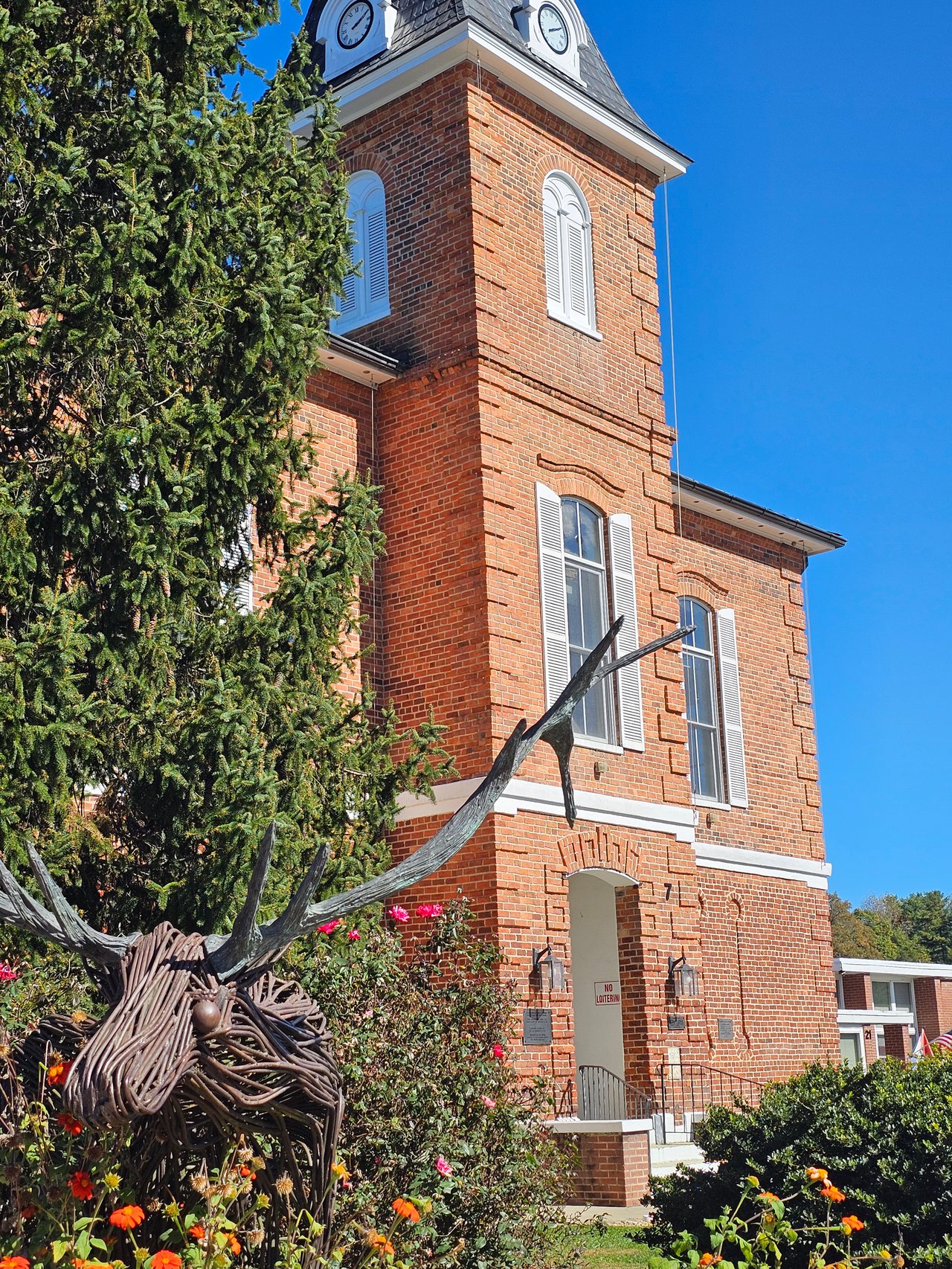
Brevard, North Carolina, is a place where mountain beauty and creativity come together.
Essential Winterization & Property Care Checklist for Mountain & Lake Homeowners
We are dedicated to helping you find your dream home and assisting with any selling needs you may have. Contact us today to start your home searching journey! (not shown Ea Dossey and Rebecka Gibson.)